Arts & Disability Focus
17–19 November 2026, TNB Festival, Rennes, France
How can public theatres contribute to a performing arts sector in which disabled artists can access training, develop their artistic practice and build sustainable professional careers?
Taking place in the framework of the TNB Festival and alongside TNB’s international Crossings programme, ETC’s two-day Arts & Disability Focus Programme invites colleagues from ETC Member Theatres to explore disability inclusion across the artistic value chain — from arts education and entry into the profession to artistic development, production and leadership.
Through workshops, conversations, performances and informal exchange, the programme will bring together perspectives from artists, arts educators, producers, cultural organisations and European initiatives. It will offer a space to examine current barriers, encounter emerging practices and consider the concrete role public theatres can play in creating a more inclusive performing arts sector.
Programme ETC Travel Grants Register Accommodation Performances
Preliminary Programme
17 November 2026
17:00 - 18:15
Welcome/Who’s who
Transfer to Theatre
19:00
Pas moi, Diana Anselmo, L’Aire Libre (1h00)
Performance in LSI (Langue des Signes Italienne), translated live in LSF (Langue des Signes Française) et sur-titled in French and English.
Pas moi - Discover
Transfer to Theatre
21:00
Danser Ensemble, Alice Davazoglou, Le Triangle (1h00)
After the performance, continue exploring the genesis of the show and choreographer Alice Davazoglou's transmission work through an exhibition of her drawings in the lobby of the Triangle.
Exhibition “I am looking at the stars”
Transfer by metro to TNB
Late night meeting point at TNB Bar & Restaurant
18 November 2026
10:00 - 12:30
Disability & Arts Education
How can we build more inclusive pathways into the theatre profession?
Theatre schools and other forms of professional arts education are a crucial gateway into the performing arts sector. Yet for many disabled artists, barriers to accessing training remain — affecting not only who enters the profession, but ultimately whose work and perspectives are represented on our stages.
This session will explore disability inclusion in arts education from different perspectives: training institutions, artists and ensembles, innovative models of collaboration between disabled and non-disabled artists, and recent European research. It will consider what needs to change in recruitment, teaching practices, working environments and institutional cultures to make professional artistic training genuinely accessible.
The conversation will also look beyond arts schools themselves. Where do public theatres sit within this value chain, and what responsibility can they take for the next generation of theatre makers? Participants will explore how theatres can build stronger relationships with training institutions, create meaningful pathways into professional practice, and help ensure that greater inclusion in education translates into sustainable opportunities within the sector.
- Ronan Martin - Head of studies, TNB Drama School
- Madeleine Louarn & the Catalyse troupe - Director & Actor in Aimer être aimé
Lunch at TNB Restaurant
14:00 - 16:30
Disability & Arts Education
What does it take for disabled artists not only to enter the profession, but to develop, produce and lead artistic work on their own terms?
Being inclusive requires more than providing access to individual projects. It means understanding different access needs and embedding adapted forms of support throughout artistic development and production — within artists’ own teams as well as in the theatres and venues that produce, co-produce, present and tour their work.
Drawing on artists’ and producers’ experiences, this session will examine the practical conditions needed to build sustainable artistic careers and practices. The discussion will address both the visible and less visible implications of producing work with disabled artists.
The session will invite participants to consider what needs to change inside our institutions: Which new professional practices, skills and resources are required? How can access costs be recognised as an integral part of artistic production rather than an exception? And how can theatres move from accommodating individual artists towards creating structures in which disabled artists can develop their practice, exercise artistic agency and take on positions of artistic leadership?
17:00 - 18:15
TNB Crossings
Mingle with French and international delegates present during the festival
[Drinks and snacks offered by the TNB]
Transfer to Theater
19:00
Aimer, être aimé, Madeleine Louarn with the Catalyse troupe and the students of the TNB Drama School, Gabily (1h30)
Late Night Meeting Point TNB Bar & Restaurant
19 November 2026
Departure
Staying one or two days more? If some participants are interested in following the Crossings program, they can contact Isabel Andreen directly.
Complementary programme: 14:00, TNB Cinema
Alice, Danse, danse, danse (documentary by Thibaut Ras)
Screening presented by Alice Davazoglou
In this documentary, Thibaut Ras follows the creation of the first show by Alice Danser Ensemble, who is determined to break stereotypes in a bold and unprecedented project. Despite her own challenges and the difficult adaptation faced by everyone involved in the project, she becomes an unexpected driving and creative force, transcending the limits imposed by her disability.
Practical Information
ETC TRAVEL GRANTS
ETC offers a limited number of travel grants (first come, first served): 10 x 500,00 EUR ETC Accessible & Inclusive Theatre Learning and Travel Path Grants
(1 person per ETC Member Theatre)
Travel Dates: 17-19 November 2026; option to prolong at your own expense
Exclusive offer for ETC Member Theatres
Deadline to apply: 15 October 2026
Accommodation
Hotel Mercure Rennes Parlement
Pre-booked 10 single rooms
2 nights 17 - 19 November 2026
Negotiated price per night: 121 euros (taxe included)
The hotel is situated 5 minutes’ walk from the Théâtre national de Bretagne.
Transport
Theatre National de Bretagne
1 rue Saint Hélier
35000 Rennes
It is possible to arrive in Rennes by plane, check out destinations.
It is possible to arrive in Rennes by train, 1h40 from Gare Montparnasse Paris.
The train station is situated 10 minutes walk from the hotel and the TNB.
Booking Flights to Paris ORLY airport eases the transfer to Gare Montparnasse in Paris.
About the Performances
NOT ME
Diana Anselmo
What if the history of sound began somewhere else?
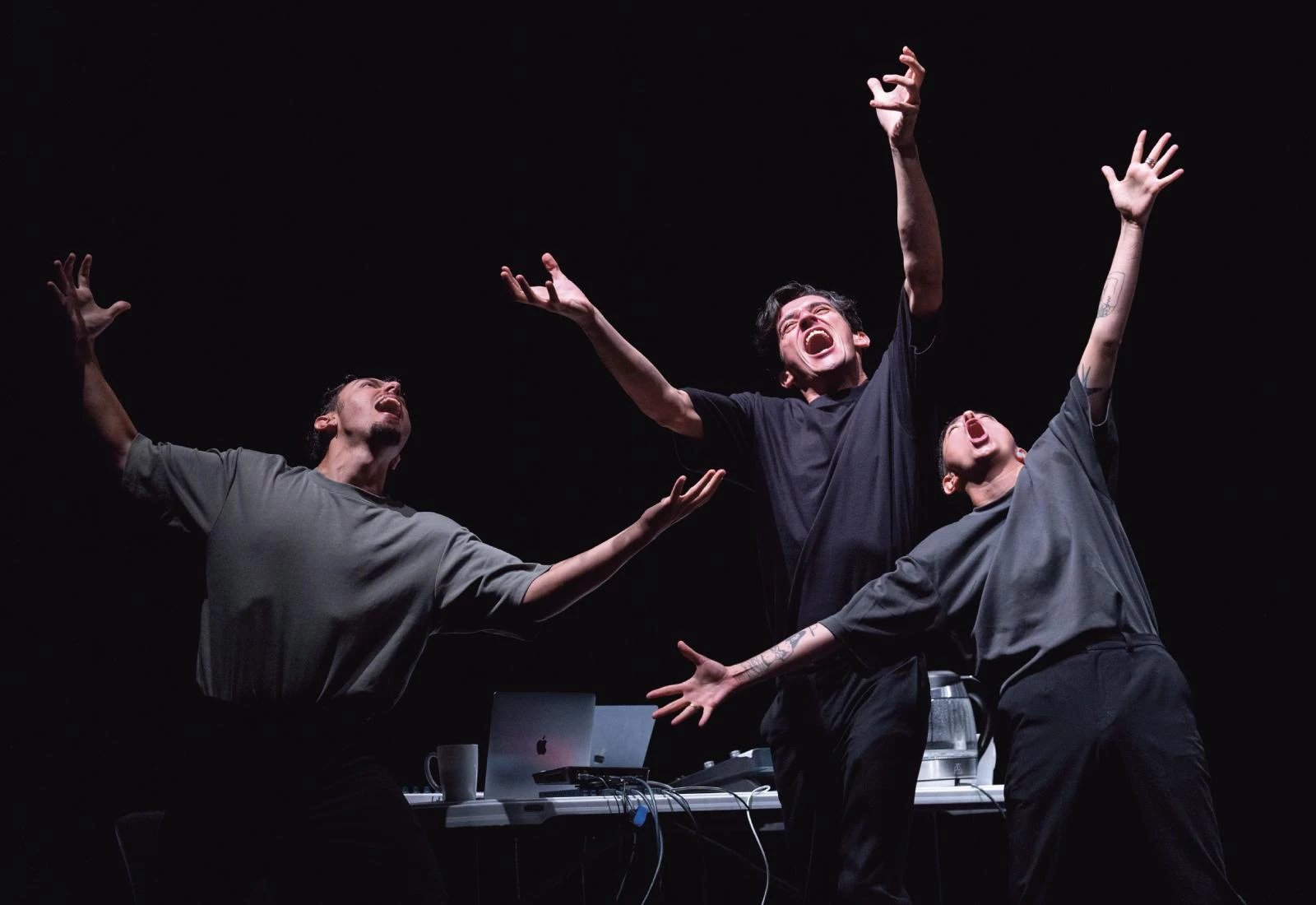
NOT ME traces the origins of the first sound-recording devices of the nineteenth century, developed as part of an attempt to "correct" deafness. Drawing on little-known archival materials and approached from a Deaf, sign language perspective, the three performers bring alternative histories to light. They challenge the ways we listen and look, opening up a space where difference is no longer understood as a lack, but as a strength that reshapes our perceptions and our imagination.
Diana Anselmo is a Deaf artist, a native signer, a queer performer, and a visual artist.
Danser Ensemble
Alice Davazoglou
With a piece designed for 10 choreographers and performers, Alice Davazoglou, a dancer with Down’s syndrome, becomes “a choreographer just like any other”.
For this first creation, Alice Davazoglou drew inspiration from her book, I Am a Person with Down’s Syndrome: Normal but Ordinary, a radiant self-portrait of a dancer with Down’s syndrome that brings together a gallery of portraits, accompanied by interviews, of her dancer friends, all of whom have disabilities. Today, she brings to the stage the choreographers she has met throughout her career as a dancer for a refreshing role reversal: she takes on the choreographic writing, whilst they take on the performance. On stage, the choreographed sequences she passes on to them unfold and develop – in groups, duets and trios. Alice Davazoglou plays on the interactions between choreographers whose paths cross under her gaze and through the lens of her sensibility.
The first project led by the company À Ciel Ouvert, Danser Ensemble marks a new step in the career of Alice Davazoglou, who trained in dance at the Laon Conservatoire and has been performing for over 20 years. In 2013, she founded the ART21 association with Françoise Davazoglou, which promotes inclusive dance, bringing together amateur dancers, with or without intellectual disabilities. The choreographic portrait of the two women, “De Françoise à Alice” by Mickaël Phelippeau, was presented last season during the TNB Festival.
Aimer, être aimé
Madeleine Louarn, Catalyse troupe with the students of the 12th promotion of TNB Drama School
Through the meeting of six performers from the Catalyse troupe and twenty students from the TNB School, Madeleine Louarn proposes to explore “the tireless commitment of loving.”
Staying as close as possible to the imagination and inspiration of the 26 performers, they gradually developed this piece together, step by step.
The act of loving is an event, a movement that intensifies existence and engages one’s whole being. Loving is not only a matter of romantic relationships; it is also shaped by social and political forces that influence our intimacy. To love is to act together to bring something of the future into being. Through this immersion in life, there is a desire to open a space for critical awareness filled with joy, risk, and adventure.
Since 2018, the TNB Drama School has invited director and associate artist Madeleine Louarn to lead research and creation residencies bringing together performers from the Catalyse troupe and young actors throughout their three years of training. From these collaborations emerged; Operetta in 2020 with Class 10, Daedalus, Someone’s Life in 2024 with Class 11, and To Love, To Be Loved with Class 12.
Cover photo: Pas moi, Diana Anselmo